
How Animals Play the Odds
Across the living world, hedging your bets is normal

No songbird checks the ten-day forecast before laying eggs. No desert seed studies rainfall maps. Yet across the living world, organisms place beautifully calibrated wagers against environmental chaos, and the underlying logic turns out to be much the same logic that runs every casino in Las Vegas.

The technical name is bet-hedging. The idea is older than Darwin: when the future is uncertain, you trade away your best possible outcome to protect against your worst. Dan Cohen formalised this in 1966 in a now-classic paper on optimal seed germination in a randomly varying environment (Cohen, J. Theor. Biol., 1966). The paper sat in the literature for almost a decade before evolutionary biologists really caught on, partly because Cohen was a theoretician writing in a journal ecologists rarely read, partly because the empirical tools to test it did not yet exist. Slatkin extended the framework in 1974 (Slatkin, Nature), Seger and Brockmann rebranded it as “bet-hedging” in 1987, and the field has been catching up to Cohen ever since.
If your environment varies between good years and catastrophic years, and you cannot predict which is coming, the lineages that survive across long stretches of time are the ones that hedge. Specifically, they sacrifice peak performance in a good year to guarantee that they are not wiped out in a bad one. Lineages around long enough to be observed by biologists are the lineages that quietly bought insurance.
I’m going to use three examples in order to make this concrete.
1. The Desert Seed Bank
Annual plants in the Sonoran Desert face a cruel lottery. October rain might mean a glorious spring of wildflowers, or it might be a single misleading shower followed by eight months of brutal sun, in which case every seedling that broke dormancy is dead within a fortnight.

How do you survive a game where germinating at the wrong moment is fatal? You don’t decide all at once.
A single parent plant produces seeds that look identical from the outside but carry different internal alarm clocks. Some are primed to sprout after the first rain. Others sleep through it. Others sleep through the second rain, or the third. Larry Venable’s group has tracked this in Sonoran Desert annuals for more than forty years at the University of Arizona’s Tumamoc Hill research station, a 320-hectare desert preserve on the western edge of Tucson. The dataset is one of the longest continuous records of plant population dynamics anywhere in the world. Across roughly a dozen winter annual species, including Pectocarya recurvata, Plantago patagonica, and Schismus barbatus, the patterns are extraordinarily clean. Species that experience more variable rainfall, and therefore more catastrophic years, have lower germination fractions (Venable, Ecology, 2007). When Gremer and Venable mapped germination fraction against a measure of growing-season unpredictability, they recovered the relationship Cohen had predicted forty-eight years earlier (Gremer & Venable, Ecology Letters, 2014).
The mechanism is partly chemistry, partly physics. Seed coats vary in thickness, as well as in their permeability to water, and in the concentration of dormancy-imposing hormones such as abscisic acid. This variation is heritable, and it is also probabilistic within a single plant. A mother produces seeds with different germination probabilities even when nothing in her own environment changed. No individual seed “chooses” any of this. It is the population-level signature of millions of years of dead lineages that failed to hedge.
2. The Great Tit’s Caterpillar Problem
Wytham Woods near Oxford is, by some accounts, the most intensively studied patch of forest on Earth. David Lack put up the first nestboxes there in 1947, and the Great Tit (Parus major) study has run continuously since, through Chris Perrins, John Krebs, Ben Sheldon, and a parade of doctoral students. Every breeding female in the wood is ringed. Every clutch is measured. Every chick is weighed. The result is a multigenerational pedigree of a wild bird population with very few peers anywhere.
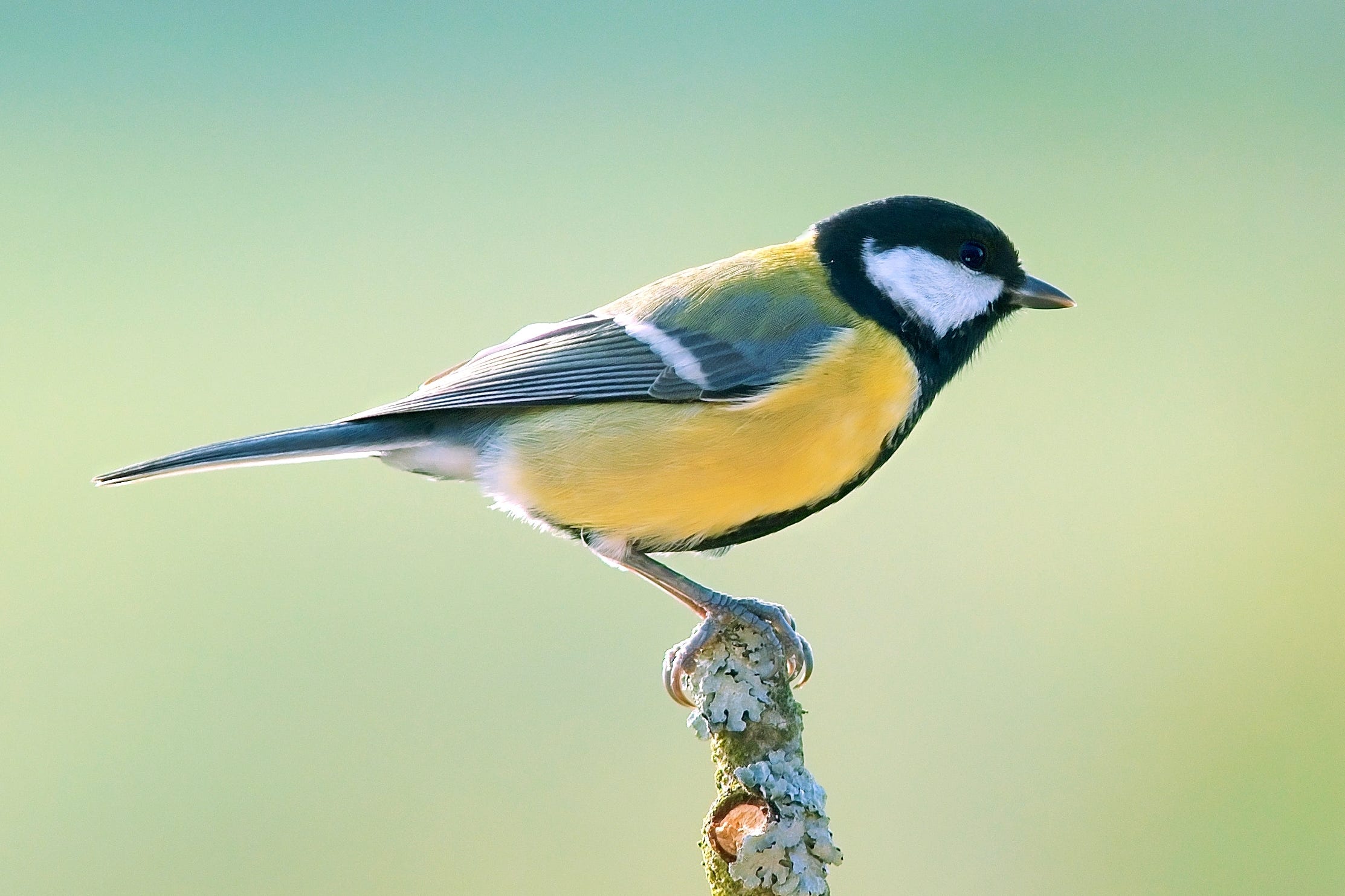
Great Tits breeding in Wytham run an annual gamble. Their chicks need to fledge during a narrow peak of caterpillar abundance in the oak canopy, mostly winter moth (Operophtera brumata) larvae, which themselves track the spring flush of new oak leaves. The window of opportunity is sharp. Miss the caterpillar peak by a week in either direction and chick weights drop, fledging success collapses, and the brood is a write-off.
Some springs the peak moves by more than ten days from one year to the next. One way to deal with this is plasticity. Females read local temperature cues and lay earlier in warm springs, and the Wytham population has tracked the warming climate remarkably well over the past fifty years (Charmantier et al., Science, 2008). The bet-hedging part is subtler and more contested. Within and between clutches, females vary egg size, lay date, and clutch size in ways that look statistically like a hedged portfolio. Boyce and Perrins (Ecology, 1987) showed that observed clutch sizes were smaller than the arithmetic optimum and consistent with maximising long-term reproductive success across variable years. Nonetheless, the work has also been heavily criticised. Andrew Simons, in a much-cited review (Simons, Proc. R. Soc. B, 2011), points out that almost every empirical case of vertebrate bet-hedging suffers from the same problem: variance in fitness components is easy to measure, and pinning down whether that variance is adaptive (genuine hedging) or merely the noisy output of imperfect plasticity is genuinely hard. Disentangling the two remains one of the open problems in evolutionary ecology.
3. The Genetic Snooze Button
Many insects skip occasional years. The northern corn rootworm (Diabrotica barberi) is a beautiful case, with a particularly entertaining historical twist.
For most of the twentieth century, northern corn rootworm eggs laid in midwestern American cornfields hatched the following spring. The larvae fed on corn roots. The adults emerged in late summer, mated, and laid the next generation. The standard pest control strategy was crop rotation. Plant corn one year, soybeans the next. The eggs hatched into a soybean field, found nothing to eat, and died. The system worked for decades.
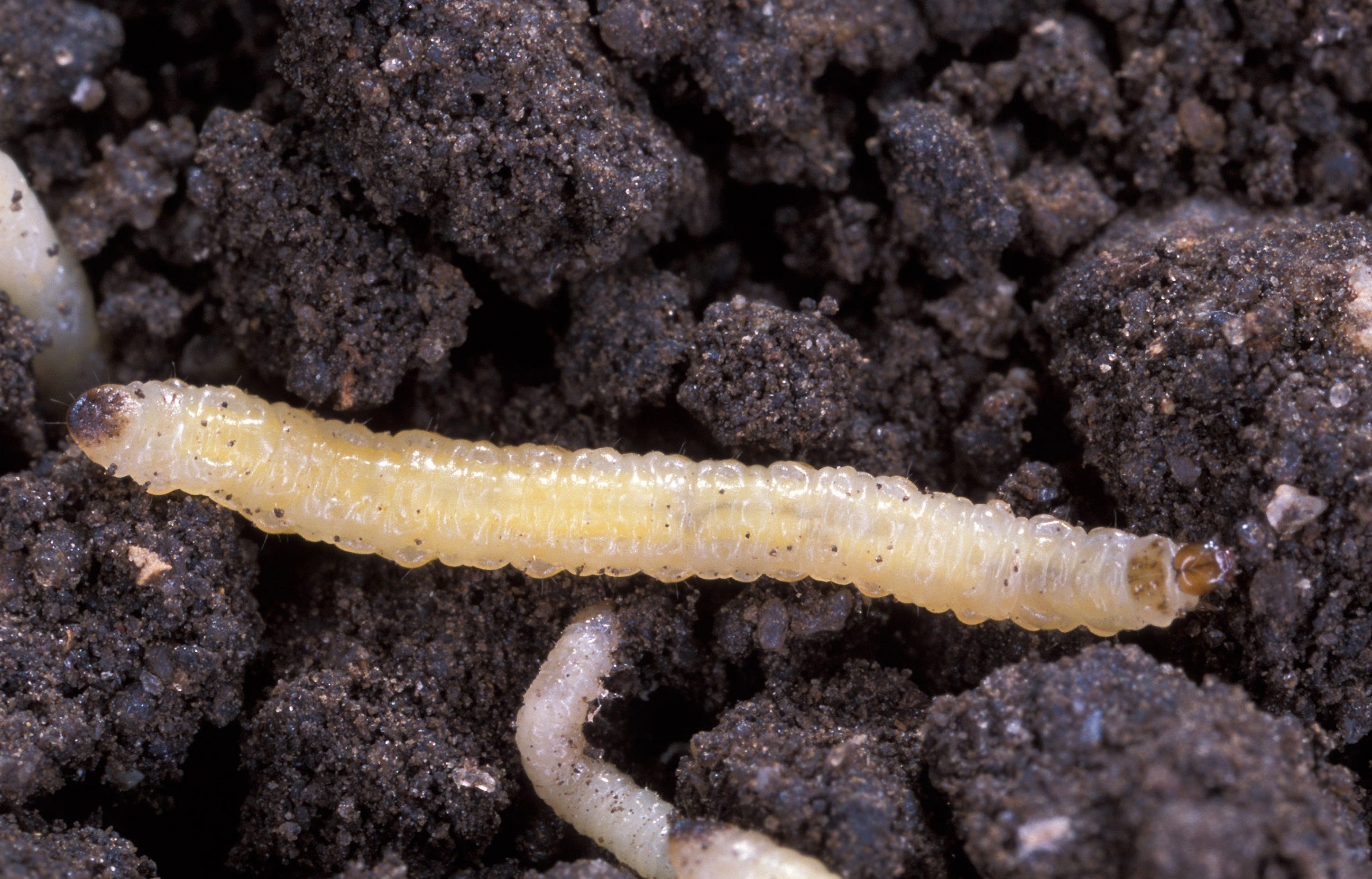
Then, beginning in the late 1980s in Illinois and Indiana, farmers started finding rootworm damage in first-year corn after soybean. Something had changed. Eli Levine and colleagues showed what it was. A heritable fraction of the population had switched to extended diapause: eggs that slept for two years rather than one. The eggs hatched two seasons later, having waited out the soybean rotation that was supposed to starve them (Levine et al., J. Econ. Entomol., 1992). Krysan and colleagues had already documented natural extended diapause in unmanaged populations years earlier (Krysan et al., Ann. Entomol. Soc. Am., 1986), but the agricultural rotation supplied the selection pressure that drove the bet-hedging genotypes from low frequency to dominant.
The general theory of diapause as bet-hedging is laid out in Menu, Roebuck and Viala (Menu et al., Am. Nat., 2000). Prolonged dormancy has become the canonical insect hedge. If a late frost, a predator outbreak, or a humans-with-tractors event wipes out the surface population in any given year, the underground reserves emerge later to reclaim the habitat. Evolutionary cold storage.
The Pattern
Three lineages, three kingdoms, three completely different mechanisms. Seeds vary their germination probabilities. Birds vary their egg sizes and lay dates. Insects vary their generation times. There is a mathematical principle that ties all three together, and it is the same principle that explains why a professional gambler with an edge does not bet everything on a single hand. I will come to that in a future post.
For now, the observation is enough. When the environment is unpredictable, the lineages still around to be studied are the ones that bought insurance.
I am in the process of writing a book on this and related topics. Please share, and come back often for more writing on bet-hedging, and evolution.
Full bibliography
Boyce, M. S., & Perrins, C. M. (1987). Optimizing Great Tit clutch size in a fluctuating environment. Ecology, 68(1), 142–153. https://doi.org/10.2307/1938814
Charmantier, A., McCleery, R. H., Cole, L. R., Perrins, C., Kruuk, L. E. B., & Sheldon, B. C. (2008). Adaptive phenotypic plasticity in response to climate change in a wild bird population. Science, 320(5877), 800–803. https://doi.org/10.1126/science.1157174
Cohen, D. (1966). Optimizing reproduction in a randomly varying environment. Journal of Theoretical Biology, 12(1), 119–129. https://doi.org/10.1016/0022-5193(66)90188-3
Gremer, J. R., & Venable, D. L. (2014). Bet hedging in desert winter annual plants: optimal germination strategies in a variable environment. Ecology Letters, 17(3), 380–387. https://doi.org/10.1111/ele.12241
Krysan, J. L., Foster, D. E., Branson, T. F., Ostlie, K. R., & Cranshaw, W. S. (1986). Two years before the hatch: rootworms adapt to crop rotation. Bulletin of the Entomological Society of America, 32(4), 250–253.
Levine, E., Oloumi-Sadeghi, H., & Fisher, J. R. (1992). Discovery of multiyear diapause in Illinois and South Dakota northern corn rootworm (Coleoptera: Chrysomelidae) eggs and incidence of the prolonged diapause trait in Illinois. Journal of Economic Entomology, 85(1), 262–267. https://doi.org/10.1093/jee/85.1.262
Menu, F., Roebuck, J.-P., & Viala, M. (2000). Bet-hedging diapause strategies in stochastic environments. American Naturalist, 155(6), 724–734. https://doi.org/10.1086/303355
Seger, J., & Brockmann, H. J. (1987). What is bet-hedging? In P. H. Harvey & L. Partridge (Eds.), Oxford Surveys in Evolutionary Biology (Vol. 4, pp. 182–211). Oxford University Press.
Simons, A. M. (2011). Modes of response to environmental change and the elusive empirical evidence for bet hedging. Proceedings of the Royal Society B: Biological Sciences, 278(1712), 1601–1609. https://doi.org/10.1098/rspb.2011.0176
Slatkin, M. (1974). Hedging one’s evolutionary bets. Nature, 250(5469), 704–705. https://doi.org/10.1038/250704b0
Venable, D. L. (2007). Bet hedging in a guild of desert annuals. Ecology, 88(5), 1086–1090. https://doi.org/10.1890/06-1495