
Constraints Make Things
Diversity is not constrained by constraint, it happens because of constraint

In 1983, two post-doctoral fellows at the University of Basel named William McGinnis and Mike Levine took a short stretch of DNA from a fruit fly gene and used it as a molecular probe to search for similar sequences in other organisms. This was a kind-of fishing experiment where you wash some radioactively labelled DNA onto a spot of DNA from an animal, let it slosh around for a little while and if it finds its compatible sequence, it sticks to it and then the animal DNA is radioactive. The gene they used was involved in specifying which body segments develop which structures. They searched for similarities in beetles, in earthworms, in frogs, in mice, and in humans, and they found it everywhere.
That stretch of DNA was only 180 base pairs in length, coding for a 60-amino-acid protein domain and it was conserved with a fidelity that implied it had been doing the same fundamental job since before these lineages diverged. Since before there were vertebrates, or insects, or indeed any of the animal body plans we recognise today.
The sequence was what we call the homeobox. The genes in which this short domain is found are called Hox genes, and their discovery made the history of animal life on Earth more comprehensible and at the same time, more astonishing. Hox genes have the job of telling cells where they are in the body. During embryonic development, a featureless ball of cells begins to elongate and differentiate, and the Hox genes become expressed in overlapping domains along the head-to-tail axis. Each combination of active Hox genes gives cells a positional identity. It tells them “you are in the head region, or you are in the thorax, and so on. This positional identity determines what structures those cells will go on to build. In a fruit fly, the right Hox combination says “build me a leg here”. A different combination of the genes says “build a wing here”.
In 1894, nearly a century before McGinnis found the homeobox, the geneticist William Bateson described what he called “homeotic” mutations. These were cases in which one body part was replaced by another. So, we are talking about an antenna being replaced by a leg, or a halter (those small balancing organs behind the wings) replaced by a wing. It would be wrong to mistake these for deformed structures, because they weren’t. They were perfectly formed structures, but they were just built in the wrong place. A leg popping out where an antenna should be is not a broken antenna, it is a proper, fully articulated, correct leg, that has simply been told to grow in a part of the body that is just wrong.
What Bateson was seeing was the Hox system making mistakes. The upshot is that if you change the expression of a Hox gene, you switch the positional code in a group of cells. When they get their signal, they build whatever they have been told to build, and they build perfectly well, because the downstream construction programmes are intact. The Hox genes, I need to emphasise, are not building anything themselves. They simply provide the addressing instructions.
A fruit fly has eight Hox genes, arranged in two clusters on its chromosomes. A mouse has thirty-nine, arranged in four clusters. The clusters in the mouse are clearly derived from a common ancestry with the clusters in the fly, and even though they have been expanded by duplication, and elaborated on over hundreds of millions of years. When you look at them, you can easily see they are the same system. And experiments tell us that the spatial logic is identical: the genes are expressed along the body axis in the same order in which they sit on the chromosome. Gene one is expressed at the head end. Gene two is expressed slightly further back. And so on and so forth. This collinearity (the correlation between gene order and the place in the body it is expressed) is conserved all the way from insects to vertebrates. It has been maintained for at least six hundred million years.
To put that in perspective: six hundred million years ago, the common ancestor of flies and mice was a small, soft-bodied, probably worm-like animal in the Precambrian ocean. It did not have legs, or wings, or eyes, or segments, or a skeleton. Just a little wormy thing. But it definitely had Hox genes, arranged in a cluster, expressed in order along its body axis. And that simple, elegant, ancient system of positional addressing is still running the show in every bilateral animal alive today, from beetles to butterflies, snakes to sparrows to whales. And, my dear reader (as Dawkins likes to say), in you!
The body plans that this system has produced are, to put it mildly, diverse. A millipede has about seven hundred legs. A snake has none. An eagle has wings. An octopus has eight flexible arms lined with suckers. A human has two arms and two legs, with five digits on each, arranged with bilateral symmetry. These body plans look, from the outside, as different as they might possibly be. But from inside the genome, from the perspective of the developmental machinery, they are nothing but variations on a single theme.
What is different when we compare a millipede and a snake, is the controls that are being pressed, when they are being pressed, and for how long. The regulatory architecture consists of the switches and dimmers and timers that control when each Hox gene turns on, in which cells they are turned on, at what level they are expressed, and these differences in control is where the diversity comes from. The genes themselves are essentially the same. To compare them metaphorically with music: the set of notes is fixed, but the musical score is infinite.
For many biologists, when the full picture emerged in the 1980s and 1990s, it certainly was disturbing. The expectation, before Hox genes, was that radically different body plans would require radically different genes. Makes sense, right? If you wanted to build a fly, you are going to need fly genes. Want to build a mouse? Mouse genes. The astonishing diversity of animal form should reflect an equally astonishing diversity of genetic content. Evolution, in this view, was primarily about inventing new components.
The Hox discovery inverted this expectation completely. The hardware is all the same. A fly and a mouse are built with essentially the same genetic toolkit. I’m not just talking about the Hox genes, but a whole battery of conserved developmental genes: the Pax genes that build eyes, the tinman/Nkx genes that build hearts, the hedgehog and Wnt signalling pathways that pattern tissues (yes, I know it is an alphabet-soup of names, don’t worry too much about what they are called). The toolkit is ancient, shared widely across todays species, and it is deeply conserved in sequence. What differs is the regulation. The musical score, not the notes.
This means that the diversity of every body plan, every morphological novelty, every bizarre and beautiful variation on the bilateral theme, has been generated by redeployment and not at all by de novo gene invention. The creative explosion of animal form is a story about finding new uses for old genes. And this redeployment is only possible because the toolkit is constrained. Because the Hox genes and signalling pathways don’t change. Because the deep developmental architecture is fixed.
The constraint is not the obstacle to creativity. The constraint is the medium of creativity.
Try, if you will, to imagine an alternative world where the developmental toolkit was not conserved. Where every lineage was free to reinvent its body-patterning genes from scratch. Now, it’s hard to say what you’d get for sure, because the experiment hasn’t ever been run, but I think the most likely answer is you would get absolutely nothing coherent. The reason the Hox system works and the reason regulatory changes can produce viable new body plans rather than lethal developmental catastrophes, is precisely that the downstream construction programmes are reliable. When a regulatory change tells a group of cells “you are now thorax instead of abdomen,” the cells know what to do with that instruction because the Hox-controlled developmental programmes for building thorax structures have been tested across millions of lineages going back almost a billion years. The instruction works because the system it plugs into is stable.
If the system were not stable and if the downstream programmes were themselves constantly changing, then a regulatory mutation would be a roll of the dice with no predictable outcome. Most of these changes would be lethal, because the construction programmes they invoked would be untested and unreliable. Innovation, in that case, would be completely impossible, because there would be no stable platform from which to innovate. You actually need the fixed toolkit in order to vary what the toolkit builds.
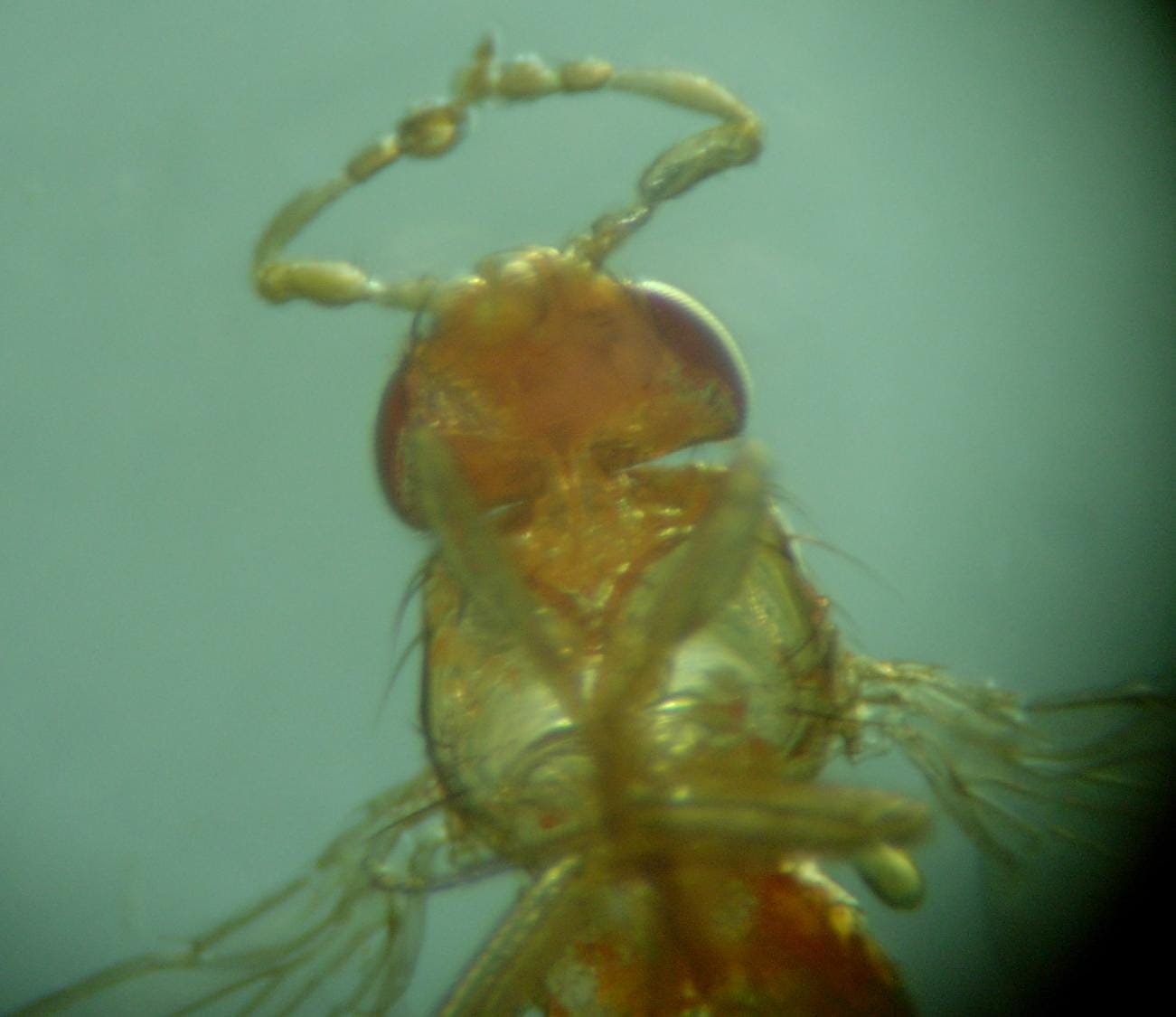
https://commons.wikimedia.org/wiki/File:Antennapedia2.jpg

This is true at every level of biological organisation, not just Hox genes. The genetic code itself, which maps the connection between triplets of DNA and the amino acids in proteins, is (almost) universal and has been essentially frozen for at least three billion years. We have a standard twenty amino acids, and a standard sixty-four codons. These standards are the same in a bacterium and in a blue whale, an E. coli and an elephant. This is an extraordinary constraint. It means that every protein that has ever been built by any organism on Earth has been assembled from the same twenty building blocks. No (well, few) exceptions. No novel amino acids. No creative workarounds. The code is locked.
The same twenty amino acids produce the haemoglobin that ferries oxygen around in your blood, as well as the collagen in your hair and nails, as well as spider silk, and antifreeze proteins, and crystallins in your eye, and snake venom and the tens of thousands of enzymes that catalyse the chemistry of life. That fundamental, absolute, hard constraint of twenty building blocks and no more, has not prevented the generation of effectively unlimited functional diversity. To the contrary, it has channelled it and made it possible, by providing a stable, reliable, universal platform on which variation can operate without destroying the system. There is a word in engineering for this principle, and it is one that biologists have borrowed with good reason: modularity. But there is another word, less technical and more honest about what the principle actually feels like from the inside, and the word is discipline.
Famously, a sonnet has fourteen lines channelled through a formal system called Iambic pentameter. A fixed rhyme scheme that in the Shakespearean form has three quatrains and a couplet. These are constraints so rigid that you might expect them to crush any possibility of original expression. Instead, the sonnet form has produced some of the most extraordinary writing in the English language. The constraint produces creativity by forcing the writer to solve the problem of “how do I say this thing I need to say within these fourteen lines, in this metre, with this rhyme?”
Likewise, a chess board has sixty-four squares, only six types of chess piece, and a handful of movement rules. Jazz musicians improvise, but they improvise within harmonic structures such as acceptable chord progressions, time signatures and key centres. The list of analogies goes on.
Now, I’ll admit analogies are dangerous, but the structural principle is the same one that operates in the Hox system, in the genetic code, and at every level of biological organisation where deep conservation coexists with surface diversity. The fixed framework makes the variation viable. Remove the framework and you get chaos, not the more intuitive result which is an increase in diversity. More precisely, I will assert, you get dead organisms, because developmental chaos is not compatible with building a body that works.
So, what does this have to do with anything beyond fruit flies and sonnets?
One of the most persistent and destructive ideas in modern culture is that freedom and creativity require the total absence of constraint. That limitations are obstacles to be overcome. That the ideal condition for doing good work, building a good life, making good things, is a blank page and a life with no restrictions, no boundaries, no rules, no structure. Just pure, unconstrained possibility.
This idea is everywhere and it is found most intensely today on social media. You see it in the career advice that says “don’t limit yourself”, in the educational philosophy that says “let children explore without structure”, in the startup culture that says “move fast and break things”. This all sounds liberating until you notice that the things being broken are usually the constraints that were making coherent action possible. It is in the self-help industry’s total fixation on “removing your limiting beliefs,” as though beliefs that limit are, by definition, beliefs that harm.
Biology says that the most generative systems in the history of life, the ones that have produced the most diversity, the most novelty, the most creativity, are the ones with the deepest constraints. The genetic code is universal and frozen. The Hox system is six hundred million years old and going strong. The laws of physics and chemistry that govern protein folding and metabolic reaction are absolute and non-negotiable. Within these constraints, life has produced everything from cyanobacteria to consciousness. It has achieved all this because of constraints.
When you feel constrained, whether it is by money, time, the demands of a job, or a family, or a body that doesn’t do what you want it to (tell me about it), then the instinct is to experience the constraint as the thing preventing you from doing what you’d really like to do. You lament not having enough time or enough money. “If only I didn’t have this obligation, this limitation, this fixed structure that I can’t change”. The Hox system suggests a different interpretation. The constraint is what’s giving your actions coherence. A cell that didn’t know its position in the body, that wasn’t constrained by the Hox code, wouldn’t be free, it would be cancerous.
A genome that wasn’t constrained by the genetic code wouldn’t be creative. It would be non-functional. A life without any fixed commitments, any non-negotiable structures, any hard boundaries isn’t a life of limitless possibility. It’s a life without a body plan. It’s a life in which nothing gets built because there’s no framework to build on. The people who produce the most creative, lasting work, tend to be people who operate within tight constraints and treat those constraints not as its collaborator, not its enemy. Ask Shakespeare.
The novelist who writes at the same time every day, in the same place, for the same number of hours is the one most likely to produce a book. The scientist who works within a specific model system for decades. The musician who masters a single instrument rather than dabbling in twelve. These people are not limited by their constraints. They are channelled by them, in the same way that the Hox system channels the developmental potential of a fertilised egg into a coherent body plan rather than a tumour.
There is a species of fly called Drosophila melanogaster, the common fruit fly, the workhorse of genetics for over a century, in which a single mutation in a Hox gene can replace the halters with a second pair of fully formed wings. The mutation is called Ultrabithorax, and the four-winged flies it produces are one of the most famous images in developmental biology. But this four-winged fly cannot actually fly. The extra wings have no flight muscles, they don’t articulate properly and they have no neural control. They are absolutely perfect wings, structurally, but they are wings in a position where the body cannot use them. The fly is a kind of beautiful monster. A demonstration, made manifest in flesh and chitin, of what happens when you change the regulatory address without changing the toolkit.
The reason the extra wings exist, the reason a simple regulatory change can produce a perfectly formed wing in the wrong place, is that the wing-building programme is rock-solid. If the developmental programme were not deeply fixed, the mutation would produce a mess. Instead, it produces a perfect wing.
If evolutionary biology is your thing, then I have a book coming out in 2027, so please subscribe here and share with your friends.
The two recent @chalopede posts muse over applying the model to vehicles that travel in the water and air. Not exactly muse, since the design for the water vehicle was actually ideated and discussed with marine engineers/designers for years. The aerial models simply apply the same logic.
The point is that mechanical design also depends on very strict rules, and blueprints (well, they are pretty much dead in the water, given that ammonia printing is obsolete, because we now have an environment of digital design tools).
Definitely not as rigid as a hard encoded strand of DNA, but very much analogous.
Intriguing. I have been reading David Epstein's book Inside the Box: How Constraints Make Us Better. He discusses many of the same principles, even using the same example of sonnets, but not applying it to evolutionary biology as you do. Your argument that constraints are the medium of creativity and drive evolution is an intriguing one. I'll have to think about that one.